

1. Introduction
Planning a fuel-pump product range means more than listing flow numbers on a sheet. For distributors, performance brands, and EFI-system OEM purchasing and engineering teams, the real decision is which high flow fuel pump classes to stock so each customer segment gets the right part without carrying dead inventory. This guide compares two brushless in-tank workhorses from KOLA MOTOR: the 255 LPH brushless unit and the 340 LPH brushless unit. We cover flow at working pressure, current, size, price, and MOQ so you can plan a defensible SKU mix. KOLA MOTOR manufactures brushless, high-performance, low-pressure, inline, external, and replacement fuel pumps for global B2B distributors and OEMs. Treat every figure below as a planning baseline and confirm exact values against the supplier’s datasheet before you quote.
2. What Is the 255 LPH Brushless In Tank Fuel Pump
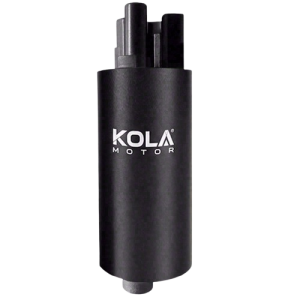
The 255 LPH Universal In-Tank Brushless Performance Fuel Pump is KOLA’s mid-flow brushless platform built for universal in-tank fitment. As an electric in tank fuel pump, it uses a brushless motor for longer service life and cooler running than brushed equivalents, which matters for vehicles that sit in hot tanks or run extended duty cycles. The 255 LPH open-flow rating positions it as the day-to-day choice for naturally aspirated and moderately boosted applications where a single pump already covers the demand. Distributors typically place this SKU at the entry of a brushless range: it is the safer default for mixed retail and workshop demand.
3. What Is the 340 LPH Brushless Electric In Tank Fuel Pump
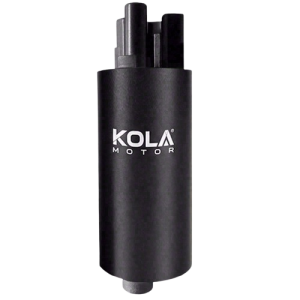
The 340 LPH Universal In-Tank Brushless Fuel Pump steps up roughly one third in open-flow capacity over the 255 LPH unit, targeting built engines, forced induction, and high-RPM EFI conversions. It belongs to the same Brushless Fuel Pumps family, so packaging philosophy and motor technology carry over, but the hydraulic end is tuned for higher delivery. For a catalog, this is the “upgrade” tier that lets you serve serious performance buyers without jumping to an external or dual-pump setup.
4. 255 LPH vs 340 LPH High Flow Fuel Pump: Key Differences
The two models share a brushless in-tank architecture, so the planning differences are about capacity, electrical load, and stocking cost rather than technology type. The table below frames the comparison; exact values must come from the current datasheet.
| Factor | 255 LPH Brushless | 340 LPH Brushless |
|---|---|---|
| Open-flow class | 255 LPH | 340 LPH |
| Typical buyer | Street, mild boost, daily | Built, forced-induction, track |
| Electrical load | Lower current draw | Higher current draw |
| Packaging | Compact universal body | Similar but higher-output core |
| Stocking position | Default core SKU | Upgrade / performance tier |
Flow at Working Pressure
Open-flow rating is measured at zero backpressure and is not what the engine sees. What matters for range planning is flow at the system’s working pressure, typically the regulated line pressure of an EFI system. The 340 LPH unit delivers more volume as pressure rises, which is why it is the safer choice when you must hold flow at the rail under heat soak and high demand. Confirm the flow-at-pressure curves on the datasheet for both classes before promising a supported horsepower figure to a customer.
Current Draw and Voltage
A higher-flow brushless efi fuel pump pulls more current, especially at low supply voltage when the battery sags under cranking or at idle with accessories on. The 255 LPH class is the gentler load on the vehicle’s wiring and relay; the 340 LPH class may justify a heavier gauge feed, a dedicated relay, and a controller with headroom. For OEM quoting, factor the electrical system, not just the pump price.
Supported Power Range Under Declared Fuel, Pressure and Reserve Assumptions
Supported engine power depends on fuel type, target rail pressure, injector size, and the reserve margin you hold for hot weather and aging components. A conservative distributor quotes power on the lower of the two flow classes once pressure and a safety reserve are subtracted. Do not publish a single horsepower number across markets; instead, state the assumptions (fuel, pressure, reserve) and let the datasheet define the ceiling. The 340 LPH class simply extends that ceiling for forced-induction and high-RPM builds.
Size and Packaging
Both are universal in-tank bodies intended to drop into existing hangers and sleeves, which keeps your installation accessory list shared across the range. The 340 LPH core may be marginally larger or use a different outlet orientation, so verify canister depth and strainer clearance against the vehicles you target. Shared packaging is a stocking advantage: one set of clips, socks, and hardware covers most of your brushless in-tank range.
Price and MOQ
The 340 LPH class carries a higher unit cost and often a different MOQ than the 255 LPH class because of motor and hydraulic tuning. For distributors, this is the lever that defines cash tied up in stock: a deep 255 LPH bench stock plus a thinner 340 LPH buffer usually beats equal depth across both. Confirm current MOQ and tiered pricing with KOLA MOTOR when you build the plan.
5. 255 LPH vs 340 LPH: Which One Fits Your Product Range
Matching Flow Classes to Customer Segments
Map flow class to who buys. The 255 LPH unit serves tuner shops, daily drivers, and mild-boost owners who want reliability over maximum flow. The 340 LPH unit serves drag, track, and forced-induction specialists who will not settle for a pump that drops off at pressure. If your customer base is 80 percent street and 20 percent race, weight inventory accordingly and use the 340 LPH as the premium line item.
Where a High Performance In Tank Fuel Pump Fits in Your Range
A high performance in tank fuel pump is not a replacement for your whole catalog; it is the top of the in-tank brushless ladder. Place the 255 LPH as the volume core and the 340 LPH as the halo SKU that justifies a performance category on your shelf and your website. Together they let you answer “will it support my build” with a confident two-step recommendation instead of a single compromise part.
Controller and EFI Fuel Pump Compatibility
Brushless pumps need a compatible controller or driver, and not every controller is tuned for every flow class. If you already stock external brushless options such as the 5.0 GPM Universal External Brushless E85 Fuel Pump, check whether the controller ecosystem overlaps so you can standardize training and returns handling. For OEM private-label programs, the GSS342 255 LPH In-Tank Fuel Pump (OEM/ODM) offers a 255 LPH platform with supply flexibility. Always validate PWM or signal compatibility against the controller’s published spec before bundling.

6. Combining Both Models in One Product Range
The strongest distributor strategy is to carry both rather than pick one. Stock the 255 LPH as the default in tank fuel pump for the majority of orders, and keep the 340 LPH as a ready upgrade for the performance query that walks in or calls. This two-SKU ladder reduces lost sales, simplifies technical support (one architecture to learn), and lets you build bundle pricing: a “stage 1” 255 LPH kit and a “stage 2” 340 LPH kit sharing the same accessory set. For OEMs, offering both flow classes under one brushless family shortens engineering review because the mounting and electrical story stay consistent.
FAQs
Q: How much power can a 255 LPH in tank fuel pump support?
A: It depends on fuel type, rail pressure, injector capacity, and the reserve you hold. Use the datasheet flow-at-pressure curve and subtract a safety margin rather than quoting a single horsepower number across all markets.
Q: Is a 340 LPH brushless pump always better than a 255 LPH pump?
A: Not for every buyer. The 340 LPH delivers more flow at pressure but draws more current and costs more. For street and mild-boost demand, the 255 LPH is usually the better-value default.
Q: Can 255 and 340 LPH pumps share the same controller?
A: Only if the controller is published as compatible with both flow classes. Confirm PWM or signal support against the controller specification before bundling them in a kit.
Q: What MOQ applies when stocking both flow classes?
A: MOQ and tiered pricing vary by class and program. Contact KOLA MOTOR for current distributor and OEM/ODM MOQ before finalizing your stocking plan.
Plan Your Brushless Fuel Pump Range With KOLA MOTOR
Get the 255 LPH and 340 LPH datasheets, flow-at-pressure curves, and distributor MOQ in one engineering review so you can build a SKU mix that sells.
Conclusion
The 255 LPH and 340 LPH brushless in-tank pumps are not rivals but rungs on the same ladder. Stock the 255 LPH as your reliable volume core and the 340 LPH as the performance upgrade, keep accessories shared, and validate every flow, current, and power claim against the supplier’s datasheet. That approach gives distributors, performance brands, and EFI OEM teams a clean, defensible product range built around a proven high flow fuel pump family. KOLA MOTOR supports global B2B distributors and OEMs with brushless fuel pump supply and OEM/ODM programs; confirm specifications directly with the manufacturer before you publish them to your customers.
