

Introduction
When an EFI module manufacturer evaluates a new fuel-delivery program, the in tank fuel pump is rarely the first component on the bill of materials, but it sets the ceiling for system performance. For custom fuel tanks, compact motorcycle EFI modules, and small-volume fuel cells, the difference between a reliable program and a field-failure program often comes down to how early the pump was specified and how precisely its integration requirements were communicated to the supplier. This guide walks through what brushless in-tank pumps are, the conditions that matter for packaging and performance, and the exact inputs you should hand to a manufacturer like KOLA MOTOR so you receive a quote and a sample that actually fit your application.
What is a Brushless In Tank Fuel Pump
A brushless in tank fuel pump is an electric fuel-delivery unit mounted inside the fuel tank that uses a brushless DC (BLDC) motor instead of a brushed commutator. By removing the mechanical brushes, the pump gains a longer service life, lower electrical noise, and better thermal behavior under continuous load. Inside a module, the brushless fuel pumps family spans compact single-pump cartridges for small tanks up to high-flow universal units for performance and industrial fuel systems. The core job is unchanged: draw fuel from the tank, build pressure, and deliver a stable flow to the engine or EFI rail regardless of tank level or orientation.
Key Integration Requirements for Custom EFI Module Programs
Specifying a brushless pump for a custom EFI module is a system exercise, not a single part-number decision. Five areas determine whether the pump integrates cleanly and survives in the field.
Packaging Dimensions and Mechanical Interfaces
The pump body diameter, length, and mounting flange must match the available bore in your tank or module hanger. An electric in tank fuel pump that is a couple of millimeters too long will not seat, and an oversized diameter will not pass through the module opening. Capture the internal depth from tank floor to lid, the bore diameter at the pump entry, and the orientation of the outlet and electrical connector before requesting samples. A simple dimensional sketch prevents most fitment surprises.
Flow Rate and Operating Pressure: Why Both Matter
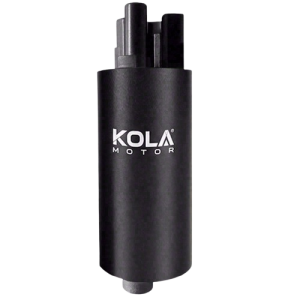
Flow and pressure are coupled. A pump rated at 340 LPH free flow may deliver far less at a closed system pressure of 3 or 4 bar. For EFI applications you should size the pump against the flow it delivers at your target operating pressure, not the open-flow headline number printed on the box. The 340 LPH universal in-tank brushless fuel pump is a useful reference point for programs that need headroom above the engine’s peak demand while leaving margin for filter restriction and line losses.
Efficiency, Current Draw, and Controllability
Brushless motors support PWM or variable-speed control, which lets the module controller match pump output to demand. That reduces heat, extends life, and lowers the current the vehicle electrical system must supply. For compact systems this controllability is often the reason to choose brushless over a fixed-speed brushed unit, because the pump can idle at low speed during warm-up and ramp only when the engine asks for flow.
How to Validate Pump Performance Against Application-Level Requirements
Do not validate the pump alone. Test it inside the actual module, with the real filter, hose length, and regulator, across the fuel levels and temperatures your application will see. Compare delivered flow and pressure against the engine map and confirm the controller’s PWM range holds the target pressure without hunting. Application-level validation catches restrictions and heat that a bare pump bench test will miss.
Universal Fuel Pumps vs Application-Specific Solutions
A universal fuel pump shortens development time and simplifies spares, but it may leave packaging or noise targets unmet in a tight module. Application-specific cartridges tune the body, outlet, and performance curve to your tank. The right choice depends on volume: low-to-mid volume custom programs often favor universal cores, while high-volume OEM modules justify a tailored design and dedicated tooling.
Applications in Fuel Cells and Custom Fuel Tanks
Small fuel cells and custom tanks put unusual demands on the pump because the geometry, slosh behavior, and duty cycle differ from a standard passenger-car tank.
Compact Pump Packaging and Module Integration
In a custom cell, every millimeter matters. A short-body brushless cartridge integrates into a hanger or pickup assembly without consuming volume the cell needs for fuel. Pairing the pump with a 255 LPH universal in-tank brushless performance fuel pump gives a balance of flow and compact length for sport and small-engine fuel systems where space is constrained.
Fuel Pickup, Reservoir Design, and Delivery Stability
An intank electric fuel pump must keep a steady supply even as the cell sloshes during cornering or as the level drops. A baffled reservoir or pickup sock with adequate filtration prevents cavitation and air ingestion. Confirm the pump’s low-level behavior with the actual cell geometry before sign-off, because a pump that starves on a half tank is a pump that fails in the customer’s hands.
Fuel Compatibility and Operating Conditions
State the fuel clearly: gasoline, E10, E85, or methanol blends change the seal, diaphragm, and bearing choices. A pump validated only for gasoline will not perform to the same life on high-ethanol fuel unless the internal materials are specified for it. Temperature range and venting also shape the selection, so share the operating envelope up front.
Brushless Fuel Pumps for Compact Motorcycle and Small EFI Modules
Motorcycle and small-engine EFI modules are the hardest packaging problem: tight space, strict noise limits, and a 12V electrical budget shared with everything else on the machine.
Space and Noise Constraints
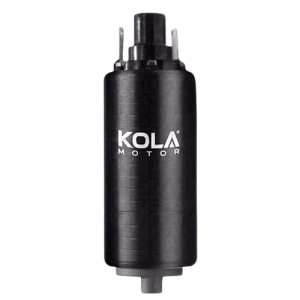
The compact brushless in-tank motorcycle fuel pump is built for short body length and quiet operation, which matters when the tank sits close to the rider. Brushless commutation reduces audible whine compared with brushed units at the same duty, helping modules meet cabin and ride-by noise expectations.
12V Electric Fuel Pump Current Draw
A 12v electric fuel pump in a motorcycle shares the battery with ignition, injection, and lighting. Size the wiring and fuse for the pump’s peak inrush and running current, and confirm the controller’s idle-speed setting keeps draw low when full flow is not needed. Undersized wiring is a common cause of voltage drop and weak delivery at the rail.
Intank Electric Fuel Pump Cooling and Fuel Level Considerations
Because the pump sits in fuel, the liquid does most of the cooling. When tank level is low, cooling capacity drops and the motor runs hotter, which accelerates wear. For applications with frequent low-level operation, specify a pump with margin in its thermal rating and avoid running it dry. Also account for vapor-lock risk in hot climates by confirming the pump and module placement keep the unit submerged under normal conditions. A well-placed pickup and a modest fuel reserve protect both cooling and delivery stability.
What EFI Module Manufacturers Should Provide to the Supplier
The fastest path to a correct sample is a complete brief. KOLA MOTOR manufactures fuel pumps for global B2B distributors and OEMs; a clear specification lets engineering return a matching proposal instead of a guess. Provide the following inputs with your request.
Tank and Module Dimensions
Submit tank internal depth, pump bore diameter, flange pattern, outlet direction, and connector type. A sketch or 3D reference accelerates the review and reduces the number of sample iterations.
Target Flow and Operating Pressure
Give the flow required at the EFI rail pressure, plus the acceptable pressure window. This is the single most important number for pump selection and should come straight from the engine calibration.
Voltage, Current and Controller
State the supply voltage (typically 12V), available current, and whether the system uses PWM or a fixed-speed controller. This determines the motor winding and driver compatibility.
Fuel Type and Ethanol Content
List the fuel and maximum ethanol percentage. Material selection for seals and internals depends entirely on this input, so do not leave it open-ended.
Sample and Test Data Requirements
Tell the supplier which validation data you need: flow-versus-pressure curve, current draw, life-test hours, or dimensional reports. For custom work, a custom fuel pump module assembly program should include agreed sample quantities and a test plan before production tooling begins.
FAQs
Q: Which tank and module dimensions are needed for an in tank fuel pump quote?
A: Provide internal tank depth, pump bore diameter, flange pattern, outlet direction, and electrical connector type so the supplier can confirm mechanical fit.
Q: Can an electric in tank fuel pump fit a compact motorcycle EFI module?
A: Yes, with a short-body brushless cartridge sized to the module bore and noise limits; confirm dimensions and current budget with the supplier before sampling.
Q: What current draw should module makers plan for a 12v electric fuel pump?
A: Plan for the pump’s running plus inrush current on a dedicated fused circuit, and use PWM idle control to reduce draw when full flow is unnecessary.
Q: Is a universal fuel pump suitable for OEM module programs?
A: For low-to-mid volume it is often the fastest route; high-volume programs may justify an application-specific cartridge to meet packaging and noise targets.
Get a Brushless In-Tank Pump Spec’d to Your EFI Module
Send KOLA MOTOR your tank dimensions, target flow at pressure, and fuel type to receive a matched datasheet, sample plan, and engineering review for your program.
Conclusion
Selecting a brushless in tank fuel pump for a custom EFI module is an integration task best started early. Define the flow-at-pressure requirement, the packaging envelope, the electrical budget, and the fuel chemistry, then give the supplier a complete brief so the sample fits the first time. Review the published datasheets to confirm every specification before committing to production, and treat the pump as one element of a validated fuel module rather than a standalone part.
