

1. Introduction
If you supply or specify fuel-delivery hardware for performance brands, fleet upgrades, or OEM engine programs, you have almost certainly faced the same sourcing question: should the pump live inside the tank, or should it sit inline on the chassis? The external fuel pump is the second option, and it remains a mainstay for high-flow, forced-induction, and motorsport fuel systems where in-tank packaging simply cannot keep up. This guide walks distributors, performance brands, and high-pressure fuel-system engineering purchasers through what an external pump is, where it wins, where it struggles, and how to select and source one with confidence.
KOLA MOTOR manufactures brushless, high-performance, low-pressure, inline, external, and replacement fuel pumps for global B2B distributors and OEMs. The technical guidance below is vendor-neutral where it counts, but the product references point to real KOLA families. As always, confirm every flow, voltage, and compatibility figure against the supplier’s datasheet before you commit to a build or a purchase order.
2. What is an External Fuel Pump
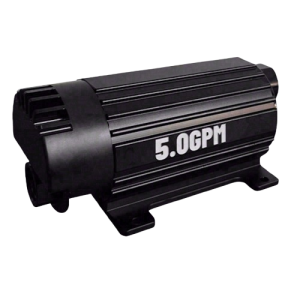
An external fuel pump is a positive-displacement or turbine-style pump mounted outside the fuel tank, typically on the vehicle chassis, subframe, or a dedicated bracket near the tank or engine bay. Instead of drawing fuel from inside the tank and pushing it up through a module, an external pump receives fuel through an inlet line (usually fed by a low-pressure lift pump or gravity/siphon from the tank) and pushes it onward to the rail or injection system.
Because it is not constrained by the diameter of a tank opening or the space inside a sender assembly, an external unit can be physically larger, run cooler in some layouts, and be serviced without dropping the tank. That freedom is exactly why the external electric fuel pump is favored in applications that push the limits of flow and pressure.
3. External Electric Fuel Pump Basics
How It Differs From an In-Tank Pump
The core difference is location and the job each pump performs. An in-tank pump is submerged, which keeps it cool and quiets operation, but limits its size and service access. An external electric fuel pump sits in free air, which makes heat management and noise more visible problems, but unlocks far more packaging flexibility and easier swap-out during service or racing.
In practice, many external setups are two-stage: a quiet in-tank or frame-mounted lift pump fills the external high-pressure stage. This split keeps inlet supply stable and protects the external pump from cavitation.
Typical Pump Designs
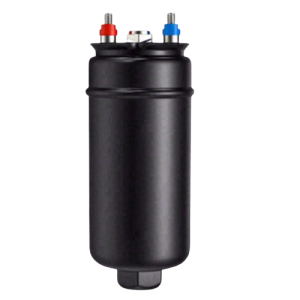
External pumps commonly use roller-cell, gerotor, or turbine architectures. High-flow inline units such as Bosch 044-type bodies are roller-cell designs prized for pressure stability. Brushless external units trade the commutator for electronic commutation, reducing spark risk and extending service life in continuous-duty and ethanol-rich environments. KOLA’s High-Performance Fuel Pumps category covers both brushed and brushless external bodies used across these layouts.
4. Benefits of an External Fuel Pump
High Flow Potential
External bodies are not limited by the bore of a tank module. A high pressure inline fuel pump can deliver the volume needed for large-displacement, multi-injector, or forced-induction engines without choking the inlet. For distributors, this is the single biggest reason customers ask for external units.
Accessible Mounting
When a pump fails, an external unit can often be reached with hand tools and a jack, not a tank drop. For fleet and motorsport customers, that serviceability translates directly into lower downtime and easier field support.
Flexible Packaging Outside the Tank
Because the pump lives on the chassis, engineers can place it close to the rail to shorten high-pressure lines, or close to the tank to shorten the suction side. This flexibility matters when an OEM project cannot redesign the tank but still needs more fuel than the original module allows.
5. Limitations of an External Fuel Pump
Noise and Vibration
Outside the damping fuel bath of an in-tank location, an external pump is audible. Mounting on a hard chassis point without isolation transfers whine and buzz into the cabin. Specifiers must plan for damped brackets and, where regulations or customer expectations demand, quieter in-tank alternatives.
Inlet Supply and Pre-Filter Requirements
An external pump is only as good as its supply. A restricted or air-leaking inlet line causes cavitation, which destroys performance and shortens life. A clean pre-filter and a positive, airtight feed from the tank are non-negotiable, and outlet pressure is meaningless without a healthy suction side.
Heat and Duty Cycle
Sitting in free air helps cooling in some layouts, but under-hood placement near exhaust or turbo hardware can cook an external pump. Continuous high-duty operation needs realistic duty-cycle planning and, for some fuels, fuel-cooled routing rather than dead-headed heat soak.
Mounting and Wiring Requirements
External pumps draw real current. Correct gauge wiring, proper relay and fuse sizing, and a solid chassis ground are mandatory. Poor wiring causes voltage drop that silently kills flow at the rail. Distributors should bundle wiring guidance with every pump sale.
6. Applications of External Fuel Pumps
High Pressure Inline Fuel Pump Systems for Forced Induction
Turbocharged and supercharged engines multiply fuel demand. An inline high pressure fuel pump on the chassis can supply the volume and pressure that a stock in-tank module cannot, often paired with a lift pump to keep the inlet fed. KOLA’s 0580254044 Bosch 044-Type High-Flow External Inline Fuel Pump is a common reference body for these builds.
Racing and Performance Builds
Motorsport teams value swappable, high-flow external pumps and the ability to run dual or staged setups. Brushless external units such as the 5.0 GPM Universal External Brushless E85 Fuel Pump support ethanol blends and sustained high output where reliability matters more than a quiet cabin.
Auxiliary and Booster Pumps
Many projects keep the stock in-tank pump and add an external booster for additional flow only when needed, such as on a nitrous or high-boost setting. The 0580254910 12V Inline Fuel Pump serves gasoline and diesel auxiliary roles where a compact 12V inline stage is the right fit.

7. How to Choose an External Fuel Pump For Your Business
Flow at Operating Pressure
Never judge a pump by free-flow Liters Per Hour alone. What matters is flow at your actual rail pressure, because flow falls as pressure rises. Request the flow curve, not a marketing number, and size for the worst-case cylinder and boost scenario with headroom.
Fuel Type and Ethanol Compatibility
Methanol, ethanol, and gasoline blends attack different seal and bearing materials. If the program runs E85 or methanol, specify compatible internals. KOLA’s External High-Flow Methanol Fuel Pump is built for that duty rather than adapted after the fact.

Voltage and Current
Confirm the pump’s rated voltage (often 12V or 13.5V system) and its current draw at pressure. Then size the wiring, relay, and fuse so voltage at the pump terminal stays within tolerance under load.
Port Size and Mounting
Match inlet and outlet port sizes to your fittings and line ID. Confirm the bracket footprint and orientation so the unit fits the chassis without custom fabrication that your customers cannot repeat at scale.
Inline High Pressure Fuel Pump vs In-Tank Design for OEM Projects
For OEM programs, the choice is rarely about which is “better” and always about the package. If the tank already has spare module capacity, a quieter in-tank solution may win on NVH and service strategy. If the engine demands flow the module cannot deliver, or the tank cannot be redesigned, an inline high pressure fuel pump stage is the pragmatic answer. Decide on flow need, NVH target, service plan, and certification path together, not in isolation.
8. What Distributors and OEM Buyers Should Confirm Before Sourcing
Flow Curves at Declared Voltage
Ask for a flow-versus-pressure curve measured at the declared supply voltage, not a single headline figure. This is the document that protects you when a customer’s engine does not make the expected power.
Compatibility Documents
Obtain written fuel-compatibility guidance covering gasoline, ethanol blends, diesel, or methanol as applicable, plus material notes for seals and bearings. Keep these on file for your own customers.
Sample Test Results
For OEM volume, request sample lot test data: current draw, pressure hold, and run-in results. A supplier that shares repeatable sample data is lower risk than one that only ships a catalog.
MOQ and Packaging
Confirm minimum order quantity, lead time, and whether packaging supports private label or barcode requirements. For distributors, packaging and MOQ often decide whether a part is sellable at all.
9. Frequently Asked Questions
Q: What are the main differences between in-tank and external fuel pumps?
A: In-tank pumps sit submerged for cooling and quiet operation but face size and service limits; external pumps mount on the chassis for higher flow potential and easier service, at the cost of more noise and stricter inlet and wiring care.
Q: Does an external fuel pump need a pre-filter?
A: Yes. A clean, correctly sized pre-filter on the inlet and an airtight feed line are essential to prevent cavitation and protect the pump from debris.
Q: What mounting and cooling limits apply to an external electric fuel pump?
A: Mount it on a damped bracket away from exhaust heat, keep the inlet line short and leak-free, and respect the published duty cycle to avoid heat soak and premature wear.
Q: When should OEM projects choose a high pressure inline fuel pump over an in-tank design?
A: Choose an inline high pressure stage when the engine’s flow demand exceeds what the tank module can deliver, or when the tank cannot be redesigned, while NVH and service strategy still allow an external location.
Specify the Right External Fuel Pump With KOLA Engineering Support
Request flow curves, fuel-compatibility documents, and sample test data for your distribution or OEM program, and get a quote sized to your real operating pressure.
10. Conclusion
The external fuel pump earns its place wherever flow demand, service access, or packaging freedom outrun what an in-tank module can deliver. It is not a universal upgrade; noise, inlet supply, heat, and wiring all demand real engineering attention. For distributors and OEM buyers, the winning move is to evaluate the actual flow curve at operating pressure, confirm fuel and ethanol compatibility in writing, and verify sample test data and MOQ before sourcing. Done right, an external or inline high pressure fuel pump stage delivers the headroom your customers’ forced-induction, racing, and auxiliary builds depend on.
