

Introduction
For performance fuel-system brands and OEM engineering or purchasing teams, selecting the right high performance fuel pump is a supplier-evaluation exercise, not a catalog pick. A pump that meets a headline flow number on the bench can fall short at your actual operating pressure, fuel blend, and duty cycle. This guide walks through the selection metrics, validation process, and private-label options that matter for OEM projects, so you can evaluate suppliers against hard data instead of marketing claims. KOLA MOTOR manufactures fuel pumps for global B2B distributors and OEMs, and the discipline below reflects how we qualify parts for our own OEM partners.
What is a High Performance Fuel Pump
A high performance fuel pump is a fuel-delivery component built to sustain higher flow and pressure than a standard replacement unit, while holding consistent output under heat and extended duty. In forced-induction, high-rpm, or flex-fuel applications, the pump must deliver enough volume at the pressure the engine actually sees, not just at the base rating printed on the box.
The term covers several architectures. An in-tank performance fuel pump sits inside the fuel module and stays cool by submersion. An external inline unit, such as a Bosch 044-type body, is mounted outside the tank for serviceability or very high flow. Brushless designs reduce current draw and heat for sustained loads. When buyers compare a performance fuel pump, they are usually weighing these layouts against a target flow-and-pressure operating point. You can review the full range in our High-Performance Fuel Pumps category.
Key Selection Criteria for a High Performance Fuel Pump
Flow at Operating Pressure for a High Flow Fuel Pump
The single most important number is flow delivered at your operating pressure, not free-flow at zero psi. A high flow fuel pump may be rated at 255 or 340 LPH, but that rating drops as pressure climbs. Request the flow curve and read the value at your target rail pressure plus any boost-reference overhead. If your project targets 500-plus wheel horsepower on gasoline, a 525 LPH-class in-tank unit such as the F90000285 525 LPH In-Tank E85 High-Performance Fuel Pump is a common reference point, but the curve value at your pressure is the only number that counts.
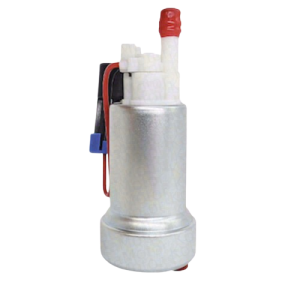
Base Pressure and Boost Reference for a High Pressure Fuel Pump
A high pressure fuel pump must be matched to base pressure and any boost-referenced rise rate. If you run a 1:1 rising-rate regulator, the pump sees base pressure plus manifold boost, so a 3-bar base pump may need to deliver at 4.5 bar or more at peak boost. Confirm the pump’s pressure ceiling and that flow at that ceiling still covers injector demand with margin. External inline bodies like the 0580254044 Bosch 044-Type High-Flow External Inline Fuel Pump are often chosen where very high pressure and serviceability matter.
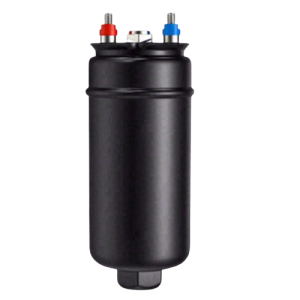
Fuel Type: Gasoline, E85 and Methanol
Fuel compatibility changes the parts you should specify. E85 is corrosive and hygroscopic, so an E85-compatible performance fuel pump uses ethanol-rated seals, brushes, and commutator materials. Methanol is even more aggressive and conductive, requiring dedicated construction. The 265 LPH Universal In-Tank E85-Compatible Performance Fuel Pump targets flex-fuel builds, while a High-Flow Methanol Fuel Pump (in-tank) is built for methanol-specific service. Never assume a gasoline-rated unit is safe on alcohol blends.

Voltage and Current Draw
Pump output tracks supply voltage, and current draw rises with pressure and load. Check the vehicle’s nominal 12V or 13.5 to 14.4V charging voltage and size the wiring and relay so the pump sees full voltage at the connector, not just at the battery. A high performance fuel pump that starves for voltage loses flow exactly when you need it. Review amp draw at your operating point to avoid melted harnesses or tripped protection.
Noise, Heat and Duty Cycle
In-tank pumps are cooled by fuel, so a near-empty tank or a returnless system running the pump hard generates heat that degrades brushes and seals. External pumps rely on airflow. Match the duty cycle to the application: continuous high-load track or industrial use needs different construction than occasional boost. Noise targets also matter for OEM cabin-comfort specs, so ask for sound-level expectations at your flow point.
Port Size, Dimensions and Mounting
Physical fit is where many OEM projects stall. Confirm inlet and outlet port diameter and thread type, overall length and diameter, and the mounting method such as hanger clamp, inline bracket, or module canister. A performance fuel pump that is perfect on paper but will not seat in your module or bracket is a no-go. Share your housing envelope early so the supplier can flag fit conflicts before sampling.
How to Evaluate a High Performance Fuel Pump for an OEM Project
Define Operating-Point Requirements
Start from the engine side: target power, fuel type, base and maximum pressure, ambient temperature range, and duty profile. Convert these into a flow requirement at a specific pressure. This operating point is the scorecard every candidate pump is measured against.
Review Flow Curves and Datasheets
Ask for a flow-versus-pressure curve, current draw, and pressure ceiling for each candidate. Cross-check the curve at your operating point against injector demand with at least 15 to 20 percent headroom. Inconsistent or missing curves are a red flag in supplier evaluation.
Sample Validation
Order samples and test them on your bench or vehicle at the real operating point. Measure actual flow, pressure stability, and current under load. Sample validation catches units that read well on paper but drift under heat or vibration.
Endurance and Consistency Review
Beyond a single good sample, review endurance data and batch-to-batch consistency. A credible OEM fuel pump supplier provides test methodology you can trust, even if you re-run the work. Look for repeatable results across multiple units, not one hero sample.
Pilot Batch Approval
Before full production, run a pilot batch through your assembly line and field or dyno validation. Confirm fit, function, and documentation survive volume. Pilot approval is the gate that turns a sampled part into a qualified production component.
OEM Fuel Pump Customization Options
Housing, Connector and Harness
Many OEM and private-label programs need a specific body, connector keying, or pigtail. Suppliers offering oem fuel pump customization can adapt housing length, port style, or connector type so the unit drops into your existing module without rework.
Branding and Labeling
Private-label programs typically require your brand on the housing, label, or laser mark. Confirm the labeling method survives fuel exposure and your warranty period, and that it does not interfere with the part number or traceability mark.
Packaging
Retail or service-channel programs may need custom boxes, inserts, or barcoded outer cartons. Define packaging early because it affects MOQ and lead time as much as the pump itself.
Documentation Package
For OEM qualification you need more than a boxed part. Specify the datasheet, test report, material declaration, and any compliance documentation up front so it is delivered with the pilot batch rather than negotiated afterward.
How to Qualify Suppliers of Performance Fuel Pumps
Test Capability
Ask what in-house test capability the supplier runs: flow stands, pressure cycling, life testing, and environmental screening. A manufacturer that tests to your operating point is far safer than one shipping to a generic spec sheet.
Traceability
Require lot or serial traceability on components and finished units. Traceability lets you isolate a field issue to a batch and is a baseline expectation for any serious OEM fuel pump program.
Batch Consistency
Request consistency data across lots, not just within one. Stable flow and current from batch to batch protect your line and your warranty returns.
MOQ and Lead Time Confirmation
Confirm minimum order quantity and realistic lead time, including tooling or labeling setup. A supplier with strong engineering but unworkable MOQ or lead time is still a poor fit for your program.
Spec Your OEM High-Performance Fuel Pump With Our Engineers
Share your operating point, fuel type, and fit envelope to receive flow curves, sample validation support, and a private-label quotation tailored to your program.
FAQs
Q: How do high-pressure fuel pumps improve engine performance?
A: They sustain the flow and pressure an engine needs at higher power and boost, so injectors get consistent fuel volume instead of leaning out at the top of the rev or boost range.
Q: What is a high pressure fuel pump?
A: It is a pump rated and constructed to deliver fuel at elevated rail pressures, often with margin for boost-referenced rise, while keeping output stable under load and heat.
Q: What validation data should OEMs request for a high performance fuel pump?
A: Request a flow-versus-pressure curve, current draw, pressure ceiling, endurance or life-test results, and batch-to-batch consistency data at your actual operating point.
Q: Is an E85-compatible performance fuel pump a different part from a gasoline model?
A: It should be. E85 needs ethanol-rated seals, brushes, and commutator materials, so a true flex-fuel unit is built differently from a gasoline-only pump rather than simply re-labeled.
Conclusion
Choosing a high performance fuel pump for an OEM project comes down to measuring candidates against your real operating point, validating with samples and pilot batches, and qualifying a supplier on test capability, traceability, and consistency. Use the selection criteria above as your scorecard, confirm fuel compatibility and fit early, and request the datasheet and validation data before you commit volume. The right discipline turns a catalog part into a dependable production component.
