

1. Introduction
If you source fuel hardware for a distribution business, a performance brand, or an OEM fuel-system program, you have almost certainly compared external and in-tank pump formats. The inline fuel pump is one of the most flexible external options available, and it sits at the center of many sourcing and engineering decisions. This guide explains what an inline fuel pump is, the main variants, where they are used, and the concrete selection points that matter when you evaluate units for resale or vehicle integration. Our goal is to give your purchasing and engineering staff a practical reference that reduces specification risk before you request a quote.
2. What Is an Inline Fuel Pump
An inline fuel pump (often written as an in line fuel pump) is an externally mounted electric pump that sits along the fuel line, outside the tank. Unlike an in-tank module that submerges the pump in fuel for cooling and priming, an inline unit is bolted to the chassis or frame and pushes or pulls fuel through the line. Because the motor is external, it is easy to access for service and simple to add to an existing system without modifying the tank.
Most units are positive-displacement or turbine-style inline electric fuel pump designs that deliver a fixed or controllable flow against a given back pressure. The key engineering trade-off is cooling: an in-tank pump is cooled by the surrounding fuel, while an external inline pump relies on its own housing and airflow, which makes duty cycle and ambient conditions more important in your evaluation.
3. Types of Inline Fuel Pumps
Not every external pump behaves the same way. The four families below cover the majority of B2B sourcing needs.
Inline Electric Fuel Pump for Low-Pressure Systems
A low-pressure inline electric fuel pump is built for carbureted engines and lift/transfer duties rather than high-pressure injection. Typical outputs sit in the single-digit PSI range, which keeps the fuel bowl and float system safe. These units are common in small engines, generator sets, and auxiliary transfer plumbing where a steady, modest flow matters more than pressure.
High Pressure Inline Fuel Pump for EFI
A high pressure inline fuel pump is engineered for electronic fuel injection, where the rail needs several bar of pressure under load. External high-flow units are popular in forced-induction and race builds because they are easy to upgrade and cool independently. Examples from our range include the Bosch 044-type high-flow external inline fuel pump and the 328 LPH inline fuel pump at 5 bar, both suited to high-demand EFI circuits where flow at pressure is the deciding metric.
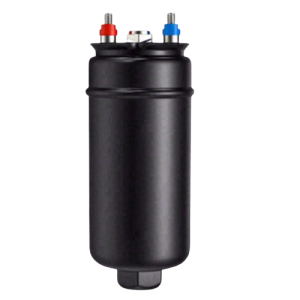
12V Inline Fuel Pump
A 12v inline fuel pump matches the electrical system of most cars, light commercial vehicles, and powersport platforms. The advantage for distributors is standardization: one voltage class covers a large share of the aftermarket. Our 12V inline fuel pump (gasoline and diesel) is built to serve mixed-fuel resellers who want a single SKU that handles both fuel families without changing the core assembly.

Inline Diesel Fuel Pump
An inline diesel fuel pump is selected for fuel compatibility and duty cycle rather than peak pressure. Diesel has different lubricity and viscosity behavior than gasoline, so the seals, valves, and motor housing must be specified for it. For lift and transfer work, the 4.7 PSI 35 GPH low-pressure diesel lift pump is a practical example of a dedicated low-pressure diesel unit used to move fuel between tanks or feed a primary filter.

4. Common Uses of an In Line Fuel Pump
The external format earns its place across several distinct applications.
Inline Fuel Pump for Carburetor Engines
An inline fuel pump for carburetor engines is one of the most requested resale items because many classic, marine, and small-engine platforms were never designed with in-tank pumps. A low-pressure external unit feeds the carburetor bowl reliably and is easy to mount near the tank or firewall.
EFI and Performance Builds
In forced-induction and high-RPM builds, a high-pressure external pump gives engineers a serviceable, upgradable path to more flow. Our high-performance fuel pumps category covers external and in-tank options for these demanding circuits, where flow at pressure under heat is the real specification.
Diesel Transfer and Lift Applications
Diesel systems use external pumps for lift duty between tanks, for heater circuits, and for pre-filter feed. Because the pressure need is modest but the run time can be long, duty cycle and compatibility dominate the selection conversation more than peak numbers.
Auxiliary and Booster Pumps
When a single in-tank pump cannot hold pressure at high load, an external inline unit is added as a booster. This is a common, cost-effective way to raise system capacity without replacing the entire module.
5. Inline Fuel Pump vs In-Tank Fuel Pump at a Glance
The table below summarizes the practical differences that affect sourcing and engineering choices.
| Factor | Inline / External Pump | In-Tank Pump |
|---|---|---|
| Mounting location | Outside tank, on the line | Inside tank, submerged |
| Cooling | Airflow and housing | Fuel bath (better) |
| Service access | Easy, external | Requires tank drop |
| Best for | Upgrades, boosters, diesel lift | OE replacement, quiet daily use |
| Noise | Usually louder | Damped by fuel and tank |
6. How to Select an Inline Fuel Pump For Your Business
Selection is where distributors and OEM buyers protect margin and reliability. Work through these five points with your supplier.
Flow and Pressure Requirements
Start from the engine or system demand, not a catalog headline. Flow is only meaningful at the pressure your system holds, so compare pump curves rather than free-flow numbers. If you are building a mixed catalog, the low-pressure fuel pumps category is a useful reference for carbureted and lift-grade specs.
Fuel Type: Gasoline, Ethanol Blends or Diesel
Confirm the exact fuel family. Ethanol blends swell some elastomers and attack certain metals, while diesel changes viscosity and lubricity. A pump rated for gasoline is not automatically safe for E85 or diesel, so match the internal materials to the fuel you will actually sell or run.
Voltage and Current
For most automotive programs a 12V class is standard, but verify the current draw against the vehicle’s wiring and relay strategy. Undersized wiring causes voltage drop, which lowers flow and shortens pump life. Ask for the current draw at the rated pressure.
Port Size and Mounting
Match inlet and outlet thread or hose barb sizes to your existing fittings to avoid adapters that leak or restrict flow. Confirm the mounting footprint so the unit fits the chassis bracket or enclosure you plan to use.
Noise and Duty Cycle
External pumps are audible. If the application is a daily driver or enclosed space, weigh noise against flow. For continuous-run diesel lift or transfer duty, confirm the rated duty cycle so the unit is not overstressed during long cycles.
7. What Distributors and OEM Buyers Should Confirm Before Sourcing
Beyond the unit itself, the commercial and quality package determines whether a supplier is viable. Confirm these four items before you approve a purchase.
Flow-Pressure Curves
Request the full curve, not a single number. A credible supplier provides flow versus pressure across the operating range so you can validate against your engine or vehicle program.
Fuel Compatibility Documents
Ask for written compatibility by fuel type, including ethanol percentage limits and diesel approval. KOLA MOTOR manufactures fuel pumps for global B2B distributors and OEMs, and we advise buyers to confirm every fuel claim against the supplier’s datasheet rather than a marketing line.
Sample Test Results
For OEM evaluation, request sample units and bench or vehicle test data. Measuring real flow at pressure on a sample protects your program before you commit to volume.
MOQ and Packaging Options
Clarify minimum order quantity, lead time, and packaging for your channel. Private-label and bulk packaging options affect both landed cost and shelf presentation, so align them with your distribution model early.
FAQs
Q: What are the main differences between inline and external fuel pumps?
A: In common B2B usage the terms overlap; “inline” describes mounting along the line, while “external” simply means outside the tank. Both refer to the same externally mounted pump family discussed in this guide.
Q: Can an inline diesel fuel pump also run gasoline?
A: Only if the supplier documents gasoline compatibility for the seals and materials. A diesel-rated unit is not automatically safe for gasoline or ethanol blends, so confirm in writing before cross-selling.
Q: What specifications should buyers confirm before approving an inline fuel pump?
A: Confirm flow at pressure, voltage and current draw, fuel compatibility, port size, duty cycle, and the supplier’s flow-pressure curve and test data.
Q: Does an inline fuel pump for carburetor engines need a pressure regulator?
A: Most low-pressure carbureted setups benefit from a regulator or a pump already limited to carburetor-safe pressure, because excess pressure can flood the float bowl.
Get Datasheets and Flow Curves for Inline Pump Sourcing
Request specification sheets, flow-pressure curves, and sample test data from KOLA MOTOR to evaluate inline fuel pumps for your distribution or OEM program.
9. Conclusion
The inline fuel pump is a versatile external solution for carbureted engines, EFI performance builds, diesel lift duty, and booster applications. Selecting the right unit comes down to flow at pressure, fuel compatibility, voltage, mounting, and duty cycle, backed by supplier documentation such as flow curves and test results. KOLA MOTOR manufactures brushless, high-performance, low-pressure, inline, external, and replacement fuel pumps for global distributors and OEMs. Before you approve any unit for resale or integration, confirm the specifications against the supplier’s datasheet and request sample validation for volume programs.
